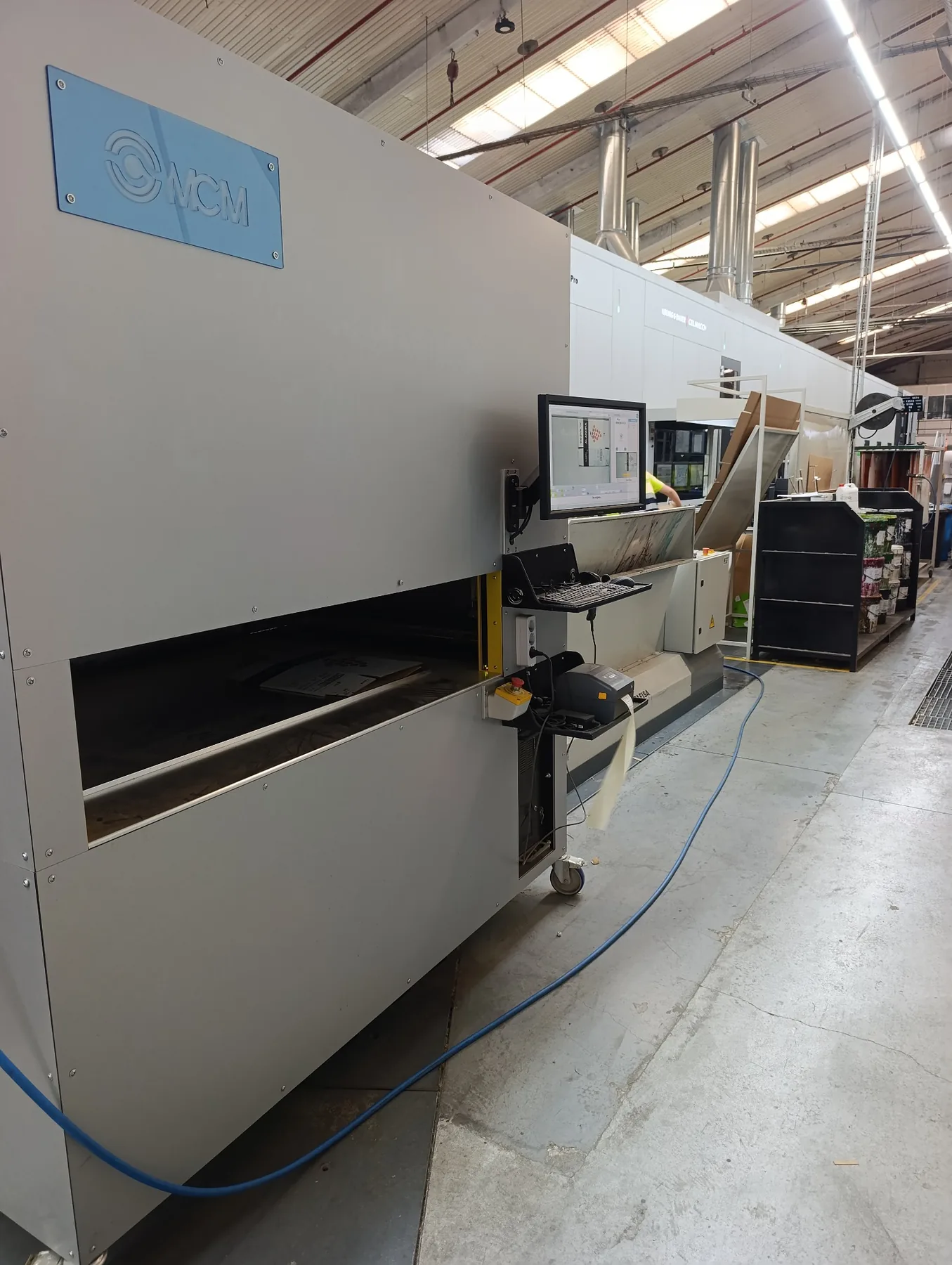
Why packaging defects become expensive
A small defect can create a large downstream cost when it is discovered after converting, packing or shipment. Wrong orientation, print errors, dimensional variation, damaged features and incomplete assembly can lead to rework, scrap or customer complaints.
Inline inspection moves the quality decision closer to the process that creates the defect. Instead of relying only on sampling, the system can inspect production continuously and give the team faster feedback.
What can be inspected?
The exact checks depend on the product and line. Typical packaging applications include orientation, print and artwork verification, barcode or code presence, dimensions, creases, surface features and other product-specific characteristics.
Camera, lighting and line conditions
Packaging materials can change in colour, reflectivity, texture and position. Line speed, vibration and available installation space also influence image quality. For this reason, a successful system is engineered with real samples and realistic production conditions rather than around a laboratory image alone.
De la détection à l'action de production
Detection becomes valuable when the result is connected to production. Depending on the process, the system can trigger a reject, warn an operator, record an event or provide data that helps identify process drift before a larger batch is affected.
Reducing waste through earlier feedback
Inspection does not eliminate process variation by itself. It makes variation visible earlier and more consistently. This can reduce unnecessary rework, help teams isolate recurring causes and provide traceable evidence of what was checked.
See MCM’s packaging inspection solutions ou request an application review using your real products and defects.
 English
  Portuguese
  French
  Spanish