Why finished-product dimensions matter
Blinds and shading products are manufactured in many sizes and configurations. Final dimensional checks help confirm that the finished product matches the required geometry before it leaves production.
Manual measurement versus automated inspection
Manual measurement can be appropriate for low volumes or sampling, but repeated checks can consume operator time and introduce variation in how measurements are taken. An automated system can apply the same measurement method repeatedly and present the result directly to production.
How laser-based measurement works
A laser measurement system captures geometric information from the product while dedicated mechanics establish the required inspection position. Software converts the acquired data into dimensions or geometric checks that can be compared with the product specification.
Engineering for large products
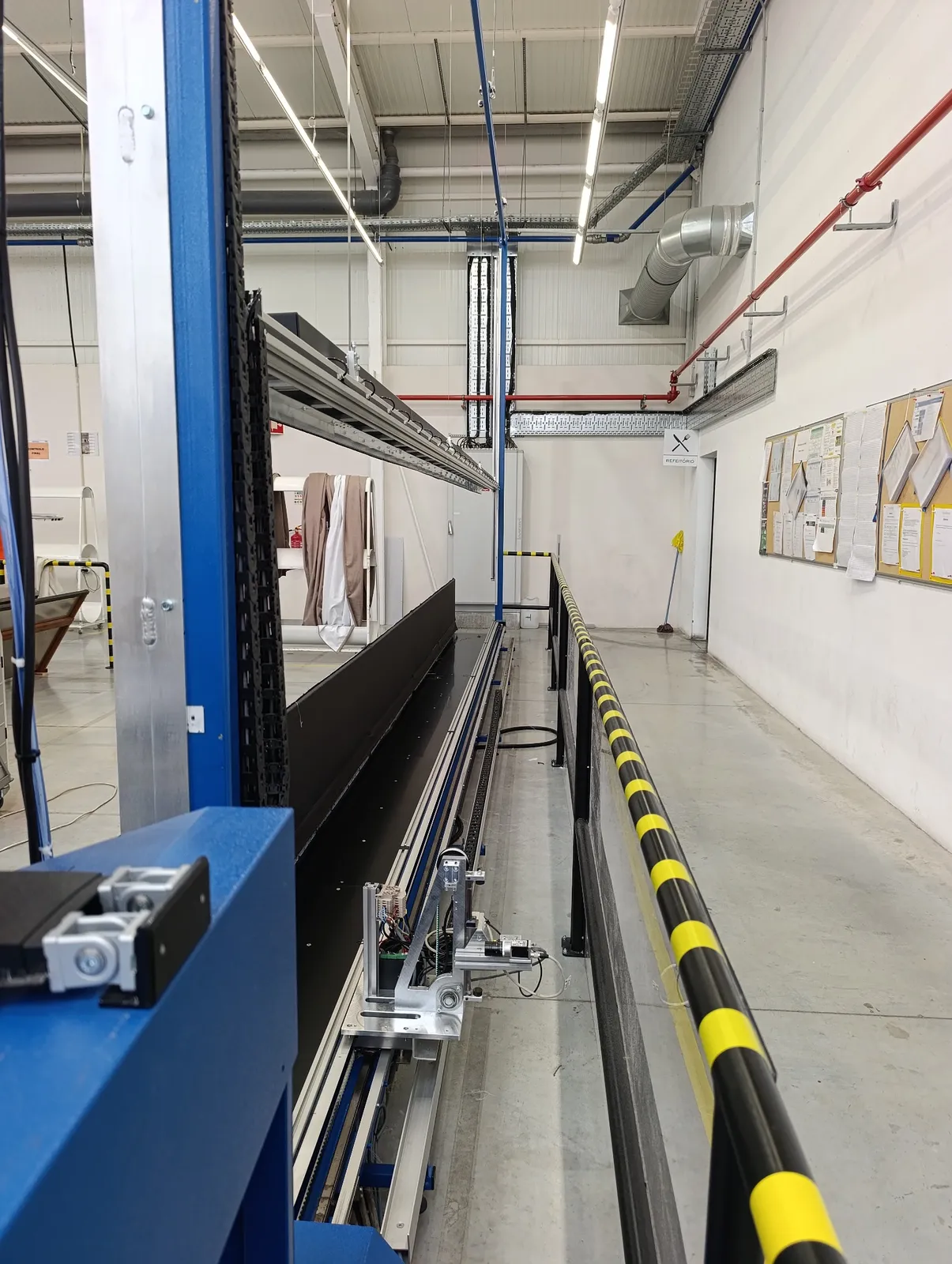
Large or flexible products create practical challenges: working distance, product curvature, alignment, mechanical stability and the available factory footprint all matter. The measurement concept therefore needs to be validated around the actual product rather than selected from sensor specifications alone.
From measurement to quality decision
The operator can receive a clear result while measurements are recorded for quality control when traceability is required. The objective is a practical station that reduces repetitive manual work while keeping the production decision understandable.
Explore MCM’s quality-control capabilities or send your product dimensions and inspection challenge.
 English
  Portuguese
  French
  Spanish