Why a PCB needs more than visual inspection
A PCB can appear correctly assembled and still contain an electrical or functional problem. Production testing provides a controlled way to verify relevant signals and behaviour before the board moves to the next manufacturing stage.
How a dedicated tester table works
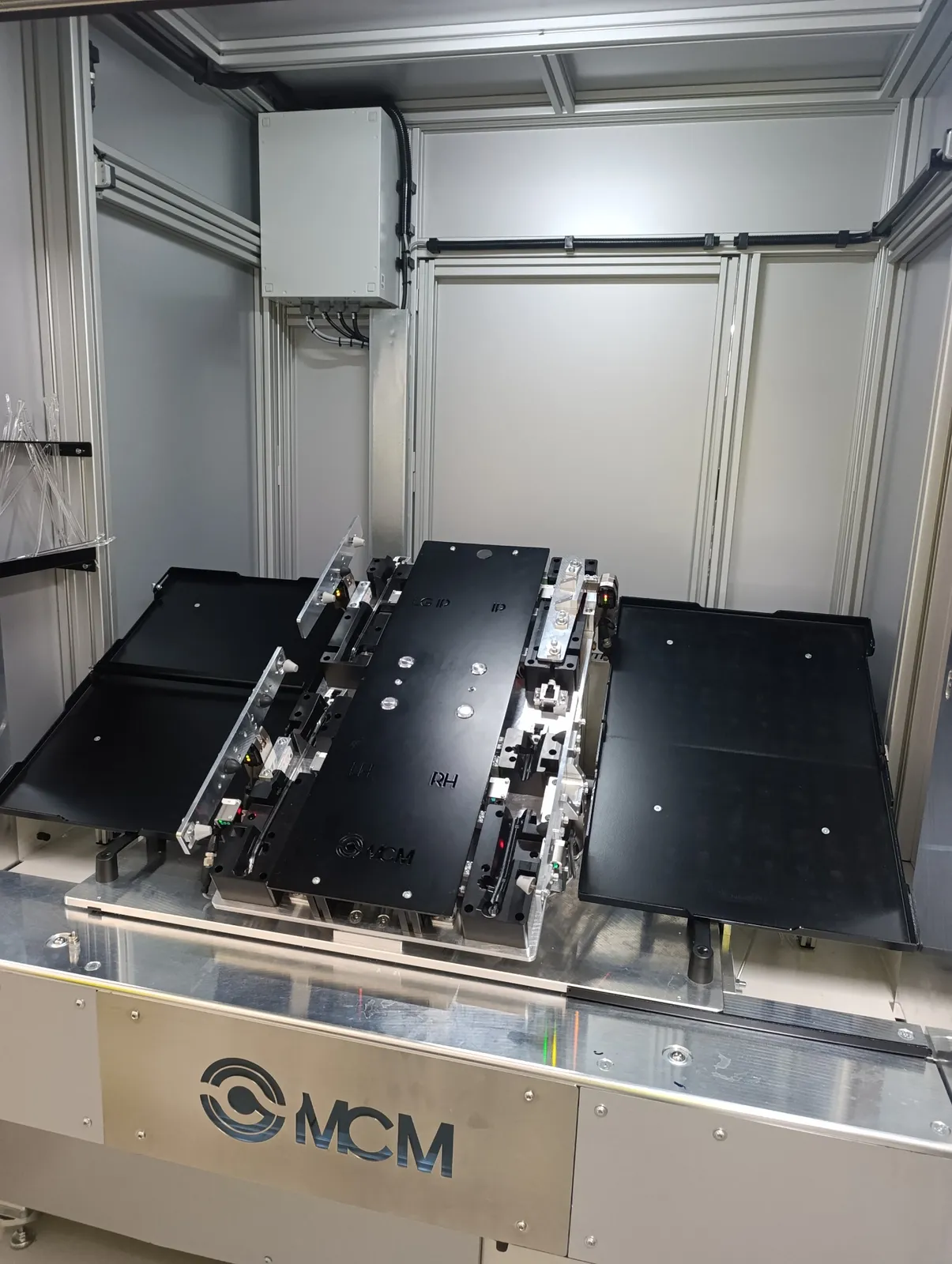
The board is positioned in a repeatable fixture so that probes or connectors contact the required points. The system can inject known input signals, measure outputs and compare results with defined limits. Software controls the sequence and presents clear information to the operator.
Fixture repeatability is critical
Reliable electrical testing depends on stable mechanical contact. Product references, clamping, probe access and operator loading all affect the quality of the measurement. The fixture therefore needs to be engineered together with the electrical and software architecture.
What the operator needs to see
A production HMI should show the current sequence, product status and useful diagnostics without adding unnecessary complexity. When a test fails, clear information can help production or maintenance identify the affected stage faster.
Traceability and result storage
Where required, measurements and pass/fail results can be associated with product identification and stored for later analysis. This makes the tester part of the factory quality-data flow rather than an isolated workstation.
See MCM PCB Tester Tables or contact the engineering team with your board and test requirements.
 English
  Portuguese
  French
  Spanish