Why corrugator defects are difficult to catch early
During Simple-Face formation at the Single Facer, several quality problems can occur, including bad flute formation, delamination, wrinkles and paper splices. The documented project also notes defects at the Double Facer, such as marks on white papers. These problems can be difficult for the driver to see while they are being produced, especially on the drive side of the Single Facer and Double Facer.
The practical risk is that a defect remains unnoticed at the corrugator and continues to converting equipment or reaches the customer. The project objective was therefore to make these defects visible earlier, warn the production team and support segregation at the corrugator.
A vision system developed around the corrugator
The documented solution was developed by SAICA PACK and MCM Systems. It applies industrial vision technology to Simple-Face quality defects and places the detection concept directly around the corrugator process rather than treating inspection as a separate end-of-line activity.
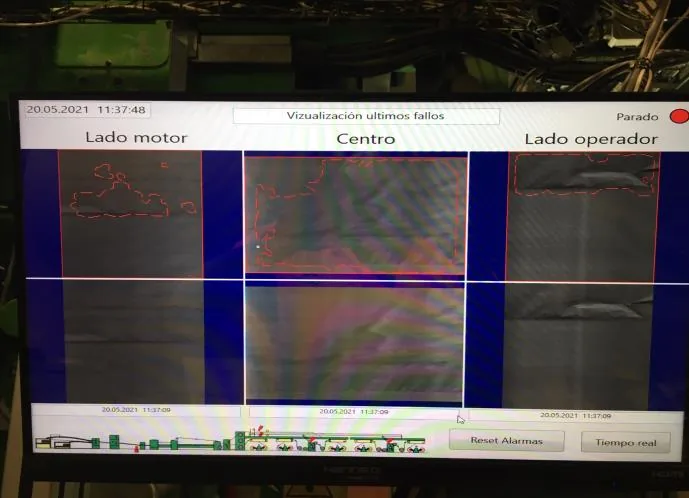
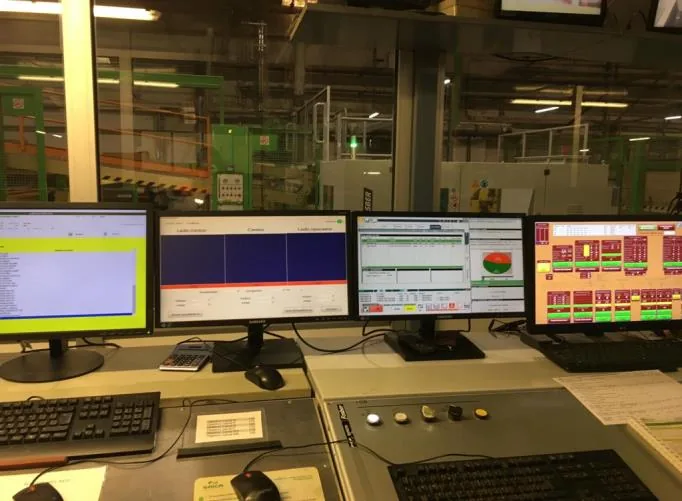
The equipment description shows inspection coverage at both Single Facers and at the outfeed of the Double Backer, where external-liner quality issues can also be evaluated. Detected failures are presented through the analysis system so that the corresponding camera information is available at the main control desk.
Which defects can the system detect?
The project documentation states that the system was trained to detect a range of corrugated-board defects. Examples include delamination, paper splices, wrinkles, bad flute formation, blisters, stains, breaks and paper alignment problems. The documented defect samples also include medium paper breaks, double splices, changes in paper width, bad glue-dam position, local and massive delamination and excess pressure from the press roll.
This matters because the inspection challenge is not one single visual pattern. A practical corrugator system must distinguish several defect classes that can appear differently depending on material, machine condition and where the issue is generated.
Massive delamination requires a production response
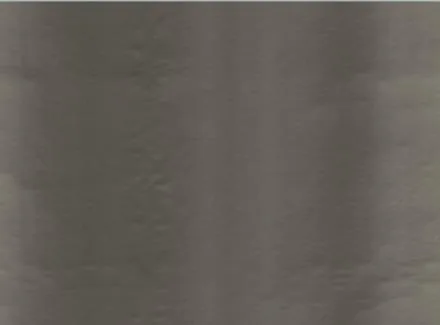
The project gives special attention to massive delamination. It notes that this condition can create large jump-ups at the dry end and that the system learning was configured to detect the condition. In the documented setup, the production team selected a slowdown response for this event.
Other response options listed in the project material include stopping the corrugator and cutting at the rotary shear. A reject after cut-off is also mentioned as a possibility to investigate. The important engineering point is that defect detection can be connected to a defined production action instead of remaining only a visual alarm.
What the production team gains from earlier visibility
The purpose of the system is to help the Single Facer and corrugator team correct the process sooner and segregate defective material before it moves further downstream. The camera views and monitoring interface give the team a clearer indication of where failures are being detected, while the line response can be defined around the customer production strategy.
For MCM, this type of application illustrates why packaging inspection has to be engineered around the real line: inspection points, defect samples, operator visibility and the required machine response all belong to the same production-quality problem.
Planning a corrugator defect-detection project
A useful first review should start with the real defect classes, representative good and bad material, the corrugator locations where the defects are generated or can be observed, and the action production expects after detection. This gives the engineering team the information needed to define where cameras should inspect and how the result should be presented or connected to the line.
Explore MCM Packaging Inspection or send MCM your defect samples and line information for an application review.
 English
  Portuguese
  French
  Spanish